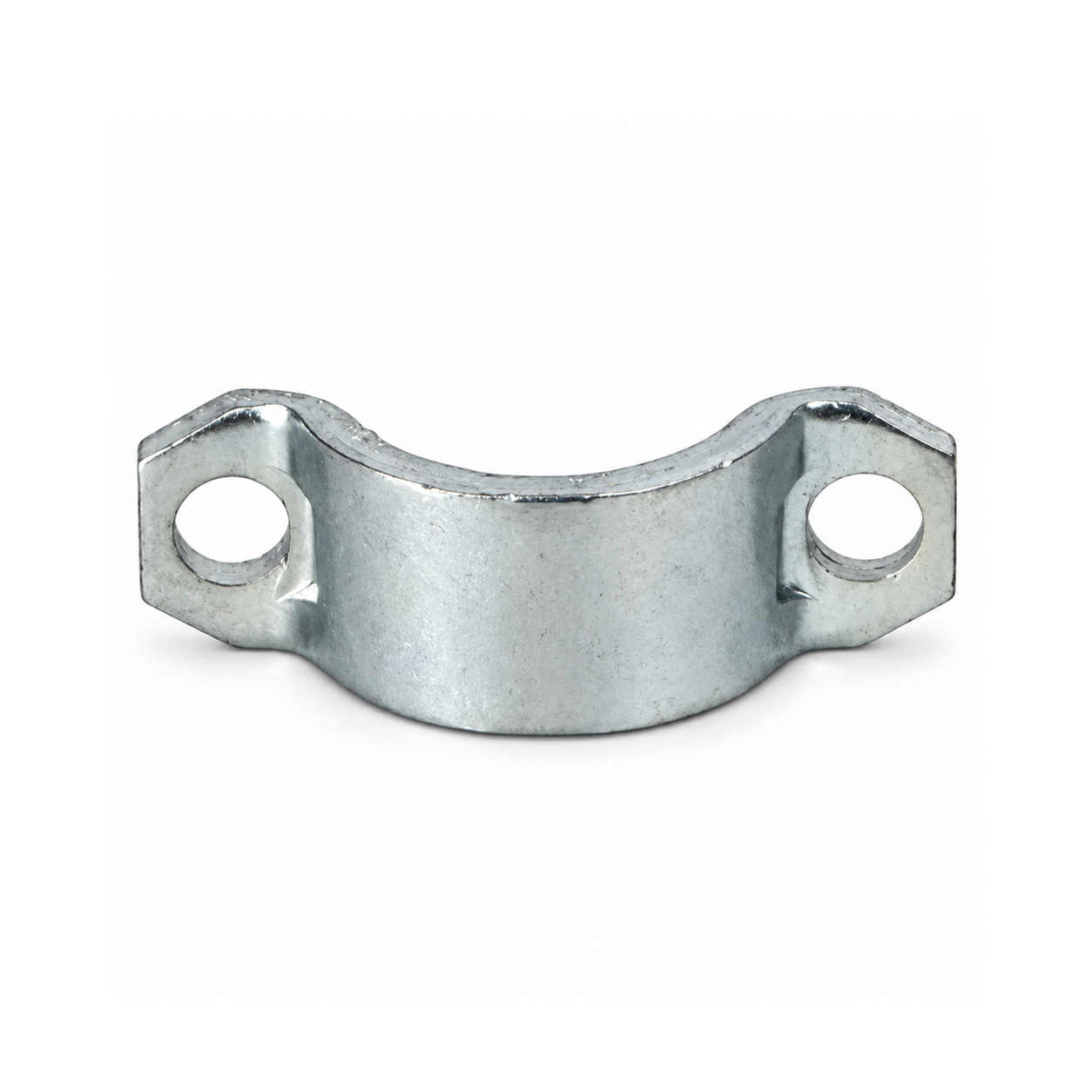
Hose clamps play a critical role in the secure fastening and joining of pipes, hoses, and other components in industrial and commercial applications. OEM Clamps offers a wide range of products in the field of clamp models, providing solutions tailored to diverse needs.
-
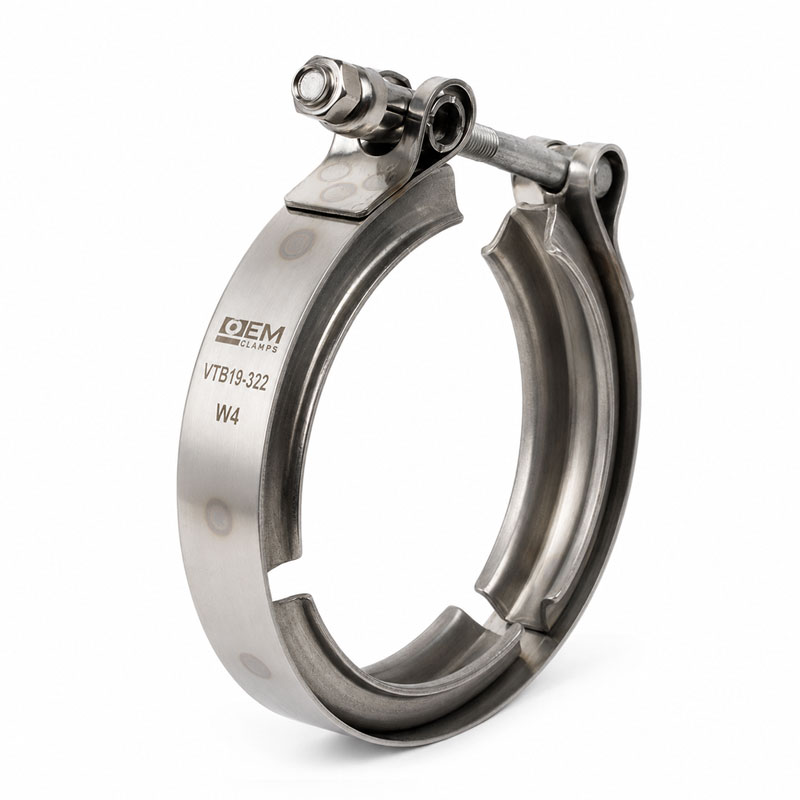
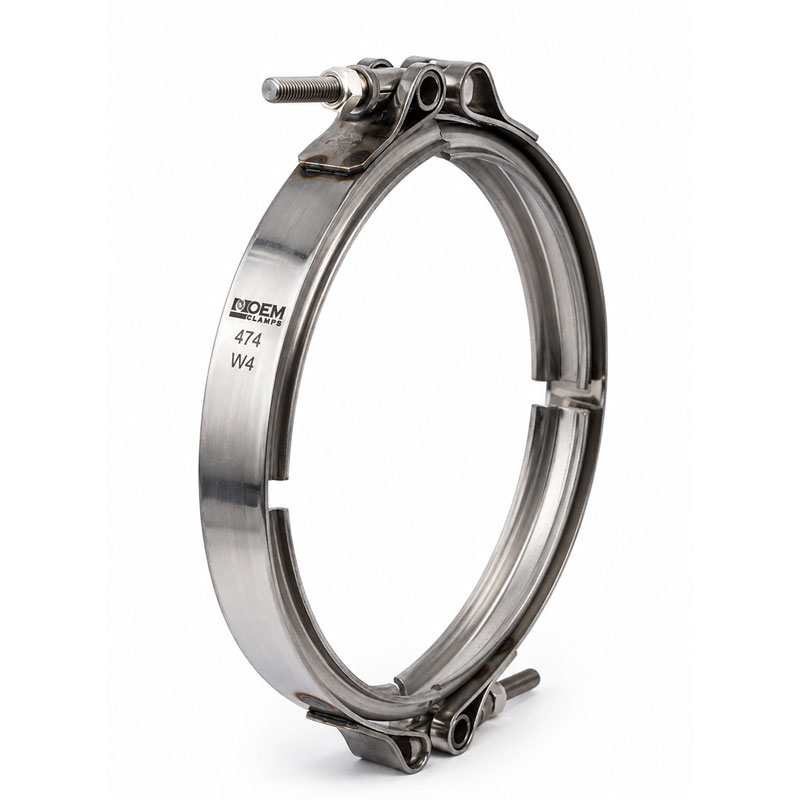
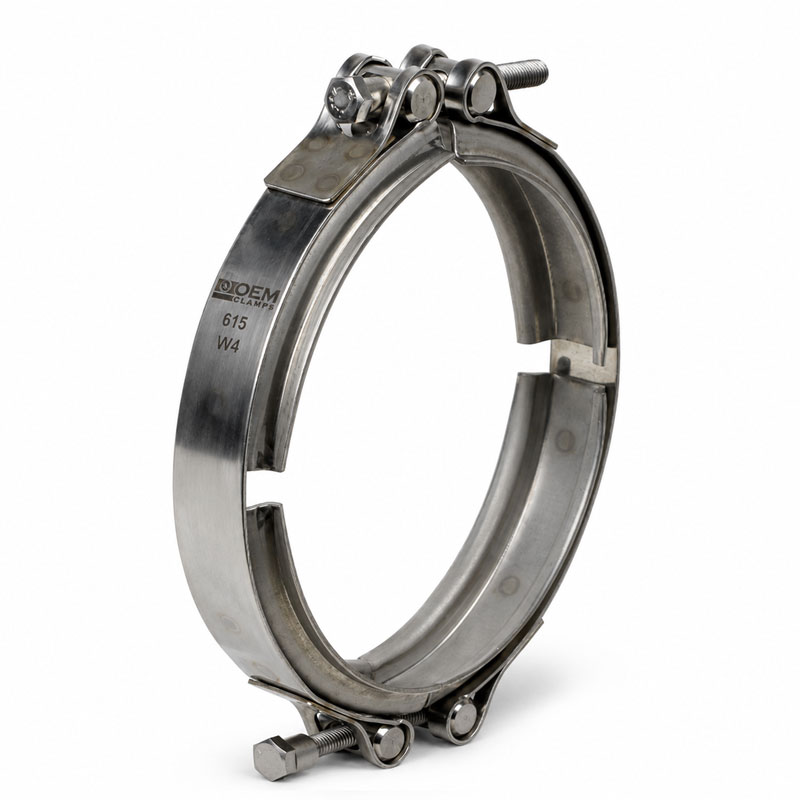
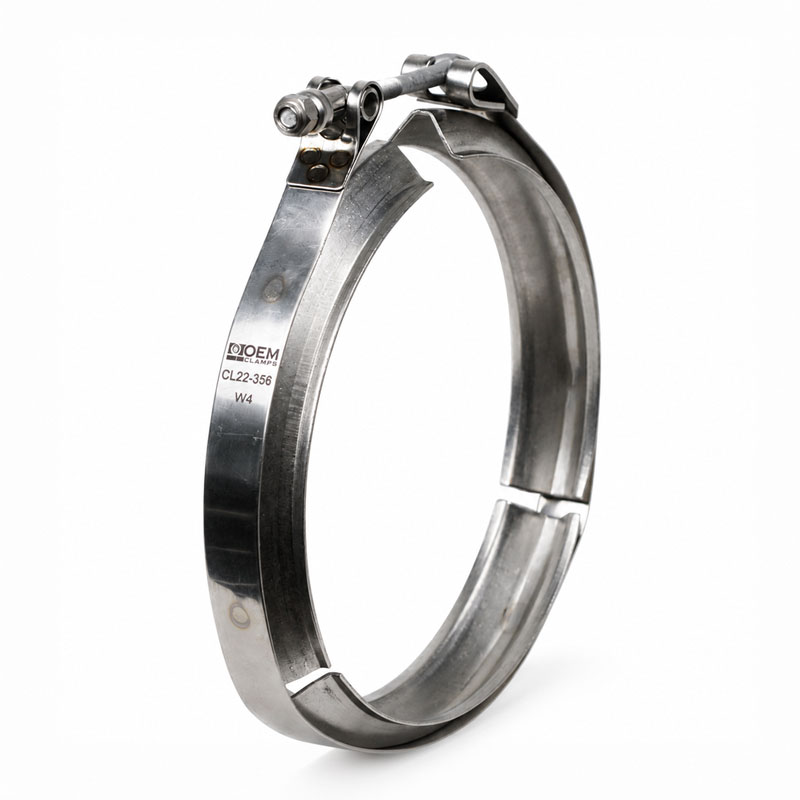
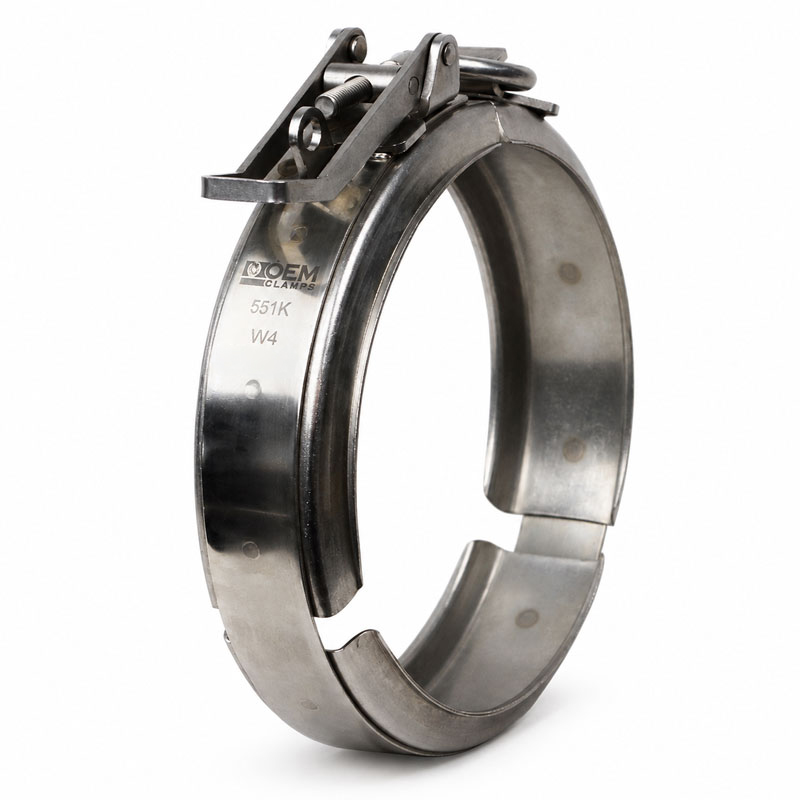
V-Band Clamps - VTB: Providing secure connections with high tightening torque in large-diameter and vibrating applications, these clamps are preferred in critical points such as exhaust systems due to their practical detachable structure.
-
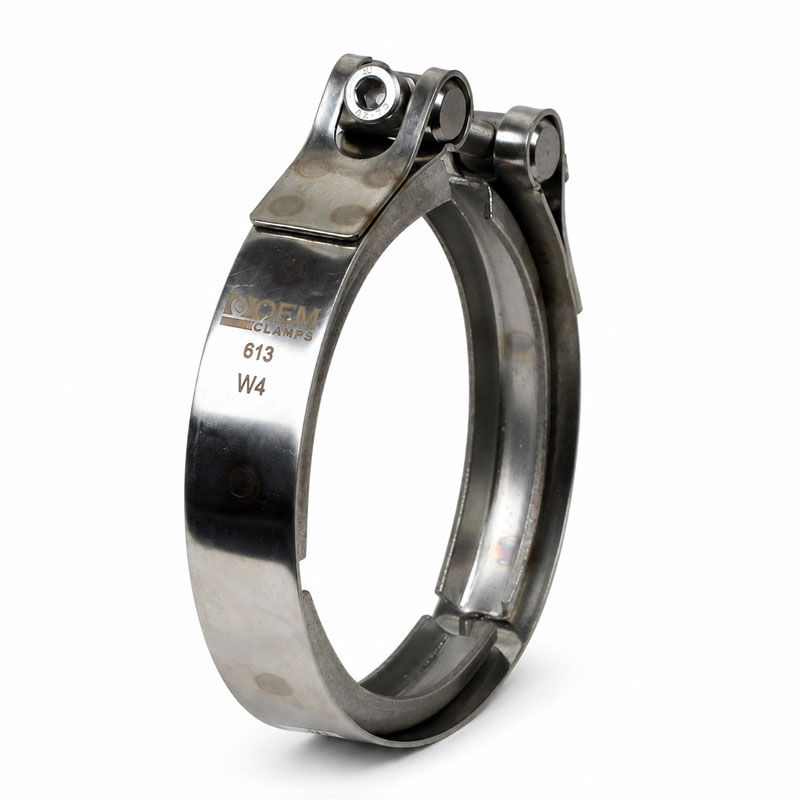
V-Band Clamps - VBC: Designed for large-diameter and vibrating applications, these clamps provide high tightening torque and secure connections, particularly in critical joints like exhaust systems.
-
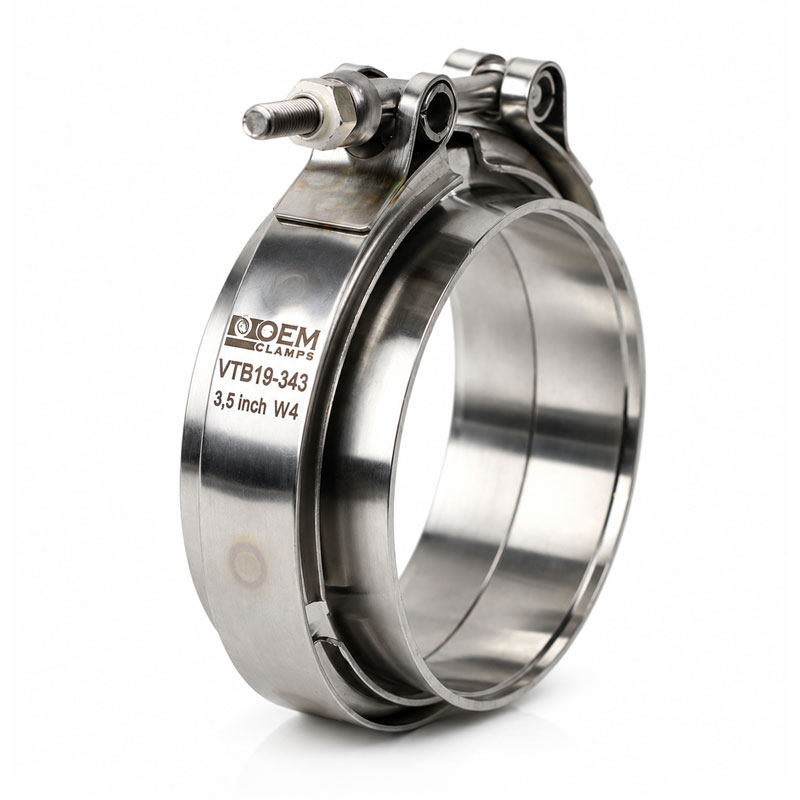
V-Band Clamps - VBK: Offering leak-proof and quickly detachable joints by fitting perfectly with V-band clamps, these flanges ensure safe usage in high-pressure lines.
-
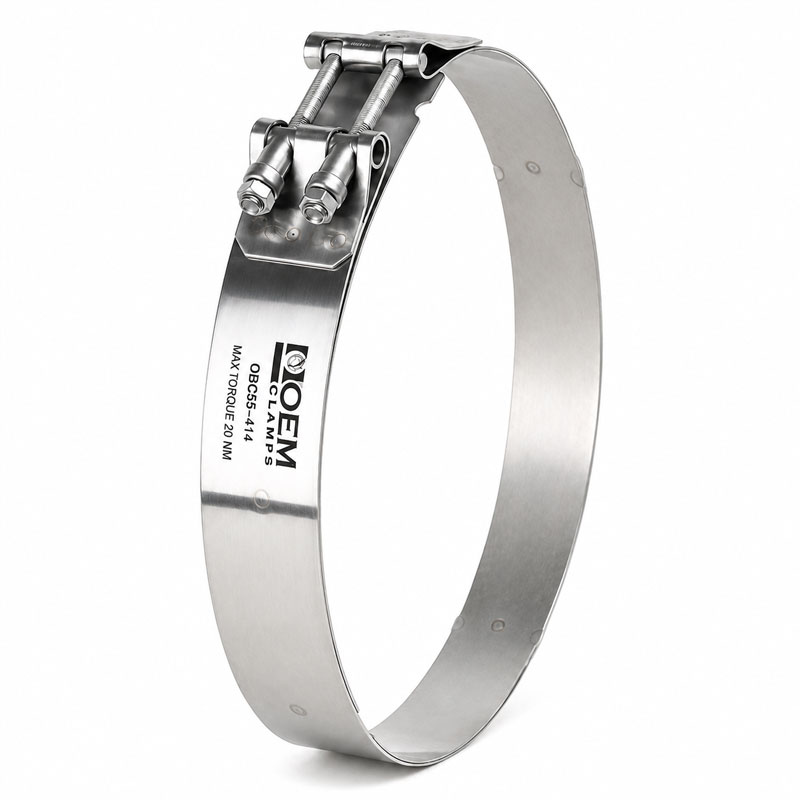
DPF Band Clamp - OBC: Used in the connection of diesel particulate filters, these clamps are resistant to high temperatures and pressures.
-
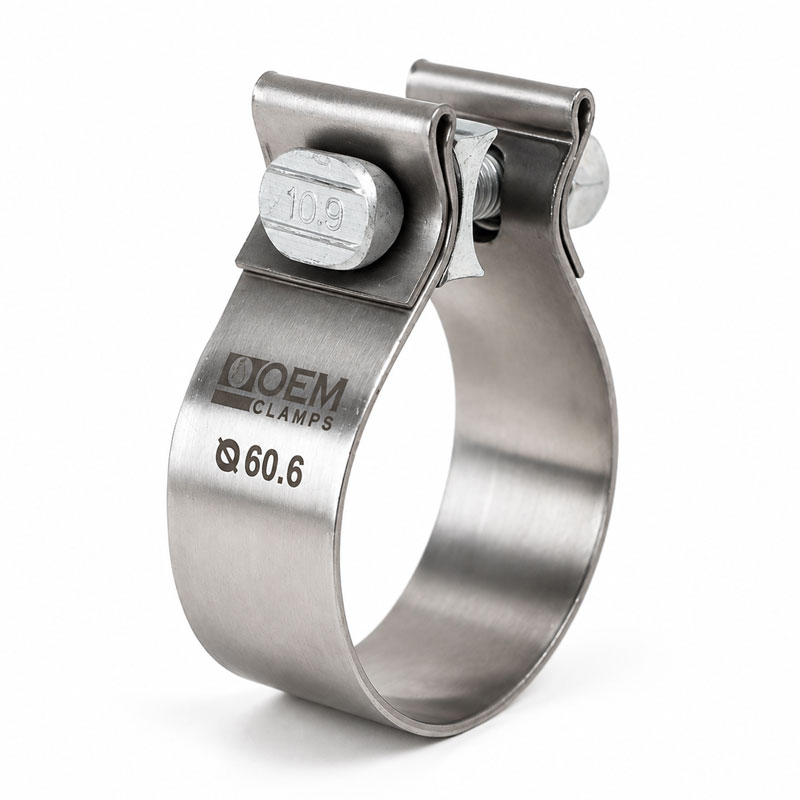
Exhaust Clamp - EK: Used for the leak-proof and solid assembly of vehicle exhaust systems, these clamps demonstrate superior resistance to high heat and vibration.
-
DTB - Model Double V-Band Clamp: Designed according to different connection requirements with single or double alternatives, these clamps offer high strength and sealing in pipeline networks.
-
DVB - Model Double V-Band Clamp: Providing extra strength under high pressure and harsh conditions thanks to its double design, these clamps offer maximum security at critical connection points.
-
Quick Release V-Clamp - QVB: Standing out with its time-saving practical locking mechanism, these clamps offer fast and secure assembly in installations that require frequent disassembly.
-
Toggle Latch V-Clamp: Designed with a quick-open-and-close latch mechanism, these clamps offer operational convenience and a strong fastening advantage.
-
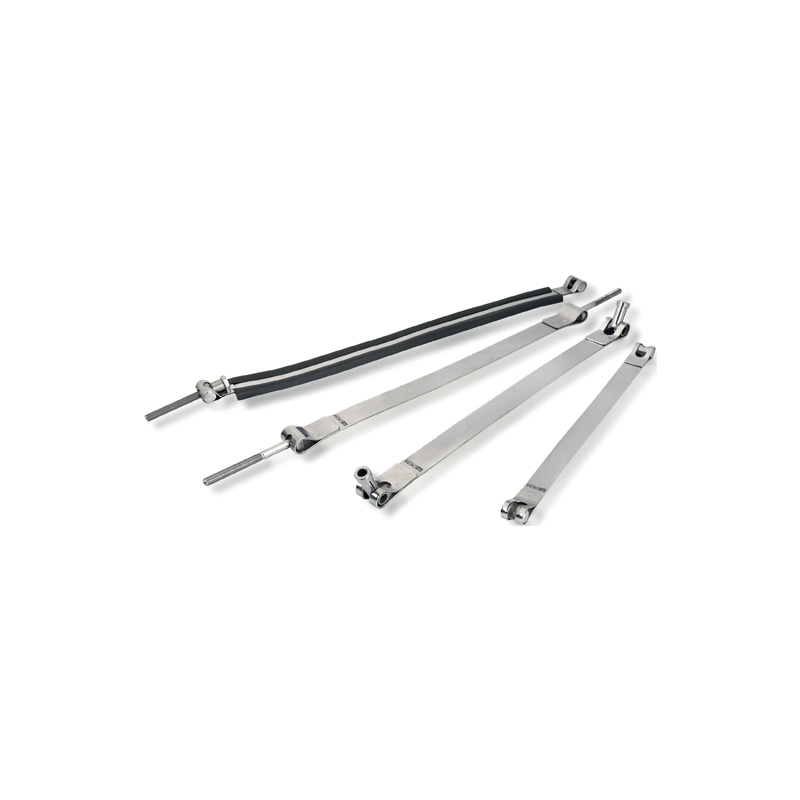
Straps: Used in the stabilization of gas or liquid tanks, these straps ensure a secure connection with their durable structures.
-
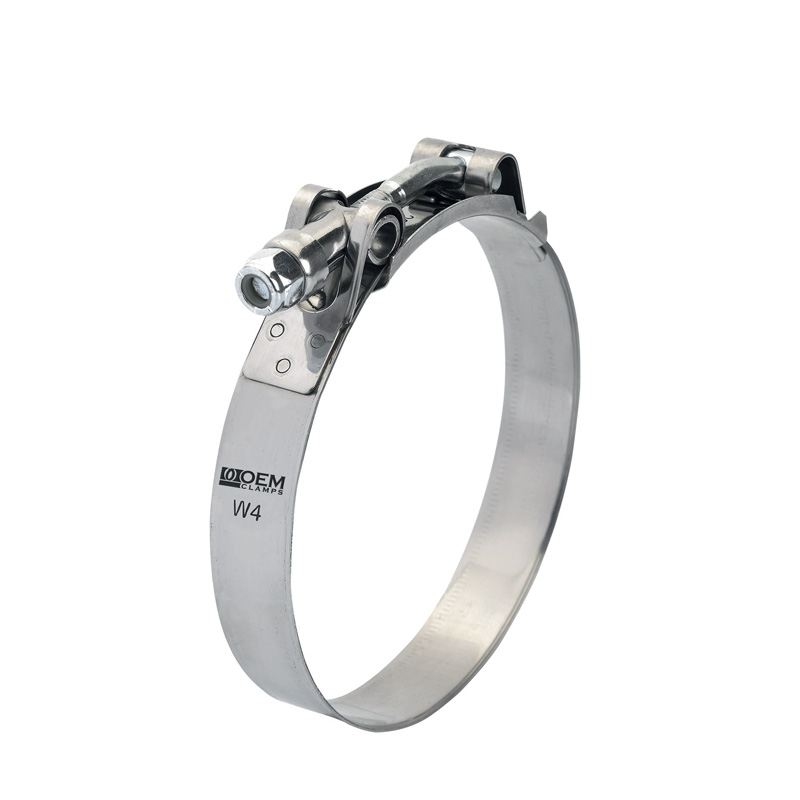
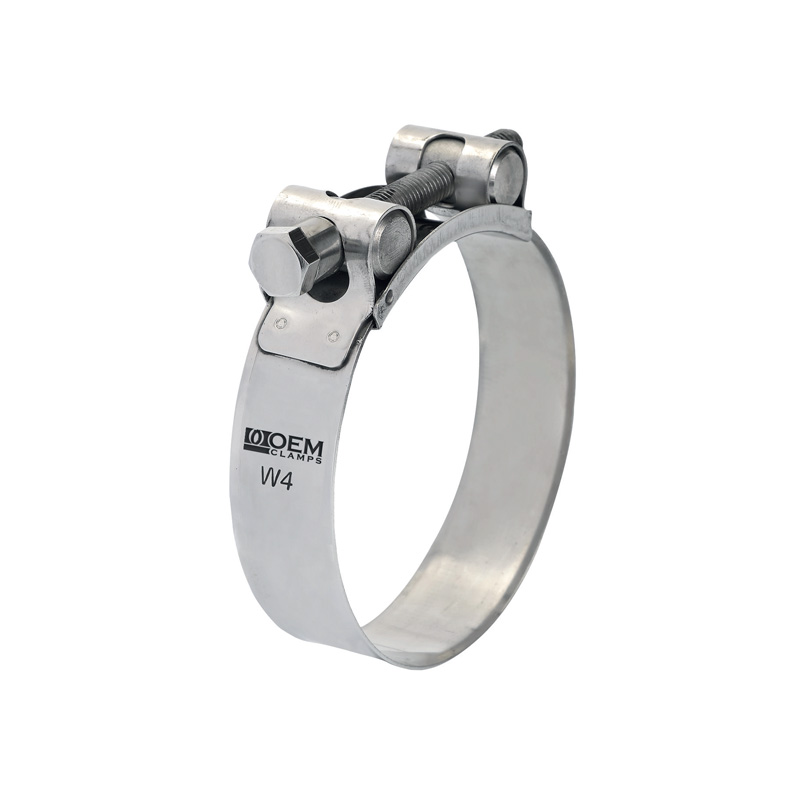
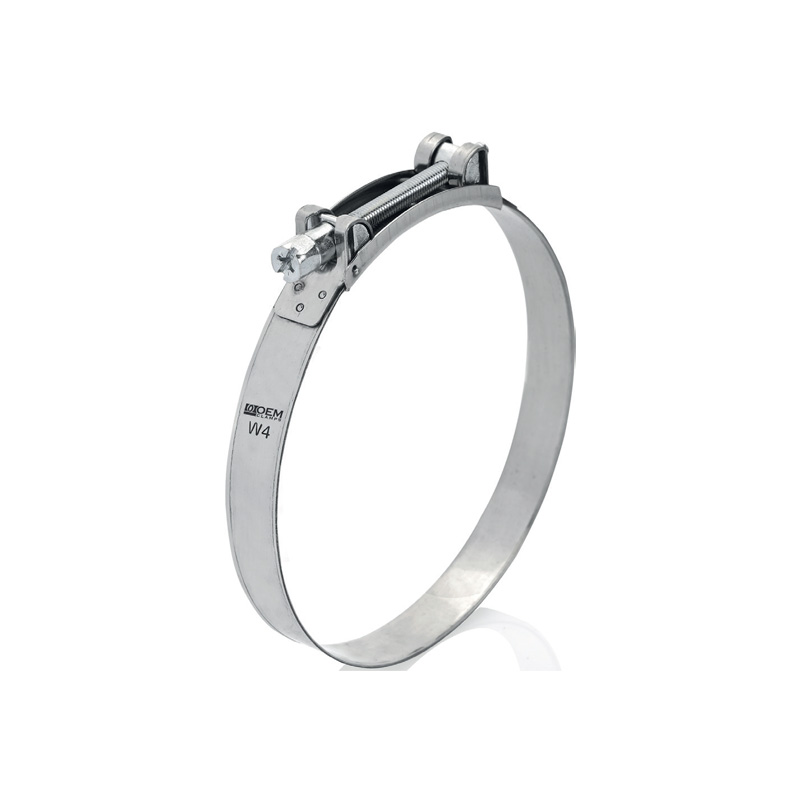
Standard T-Bolt Hose Clamps - TB: Providing high clamping force with a reinforced bolt structure, these clamps offer maximum security in industrial hose and pipe connections.
-
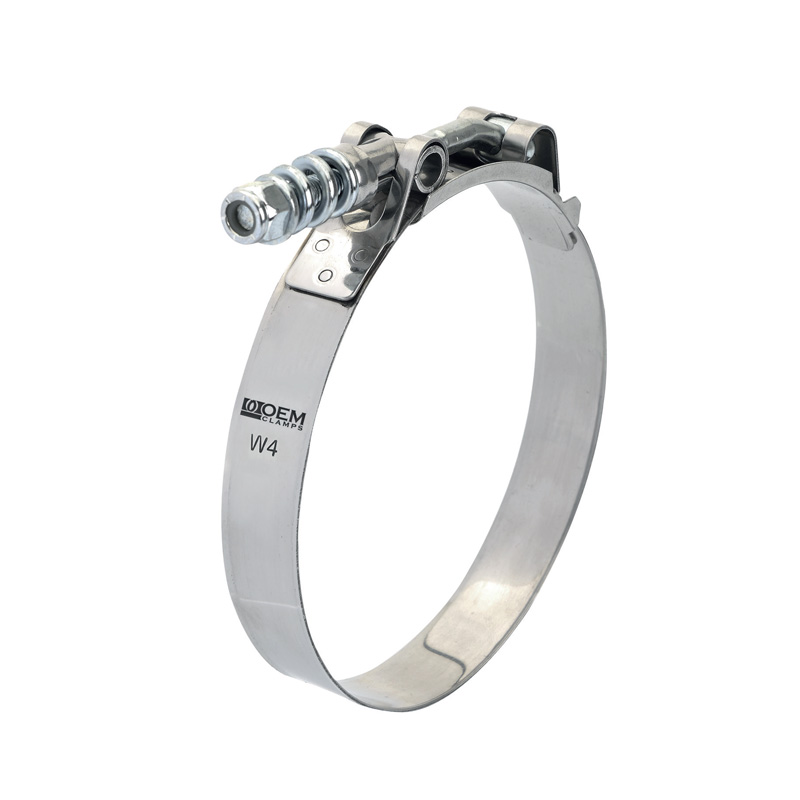
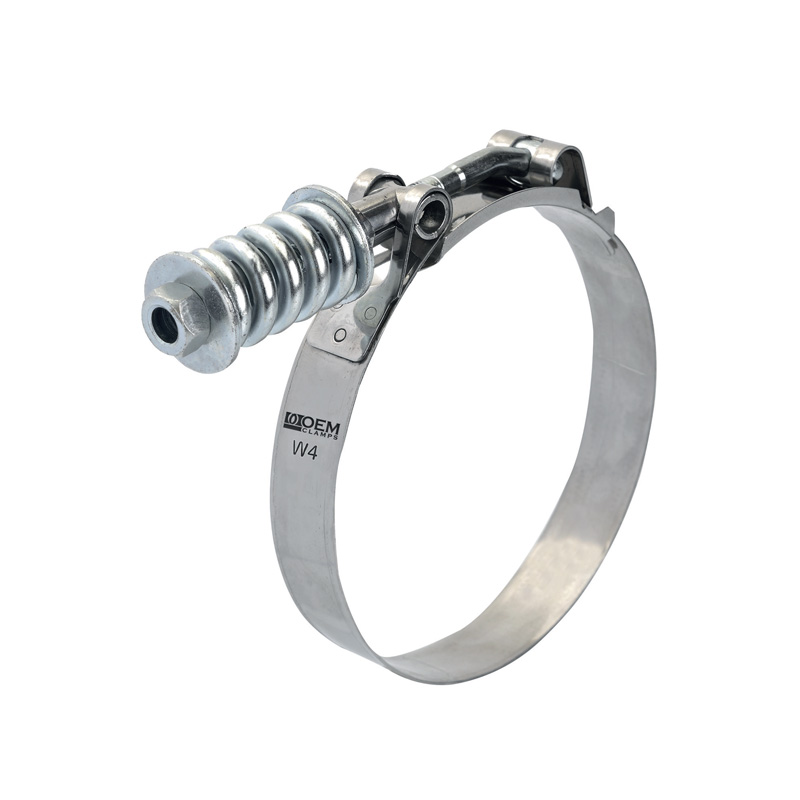
Spring Loaded T-Bolt Hose Clamps - YTB: Providing constant pressure and reliable connection in vibrating environments, these clamps offer flexibility thanks to their spring mechanism.
-
Heavy Duty Spring Loaded T-Bolt Hose Clamps - HYTB: Offering constant pressure protection against expansions caused by temperature changes, these clamps guarantee sealing in heavy-duty environments.
-
Heavy Duty Hose Clamps - AI: Designed for high tightening torque and pressurized connections, these clamps ensure sealing with their robust structures.
-
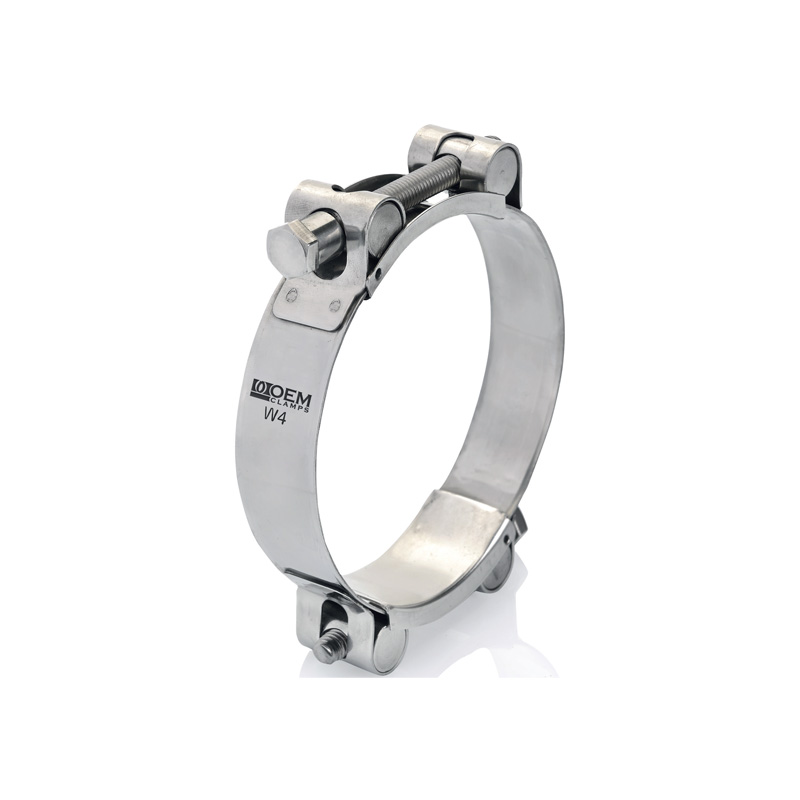
Double Heavy Duty Hose Clamps - DAI: Offering extra durability with its two-layer structure, these clamps provide a reliable connection in high-pressure applications.
-
Narrow Type Heavy Duty Hose Clamps - AI 14: Specially designed for applications requiring high clamping force and secure sealing in narrow spaces, these clamps offer superior performance with their compact structure.
-
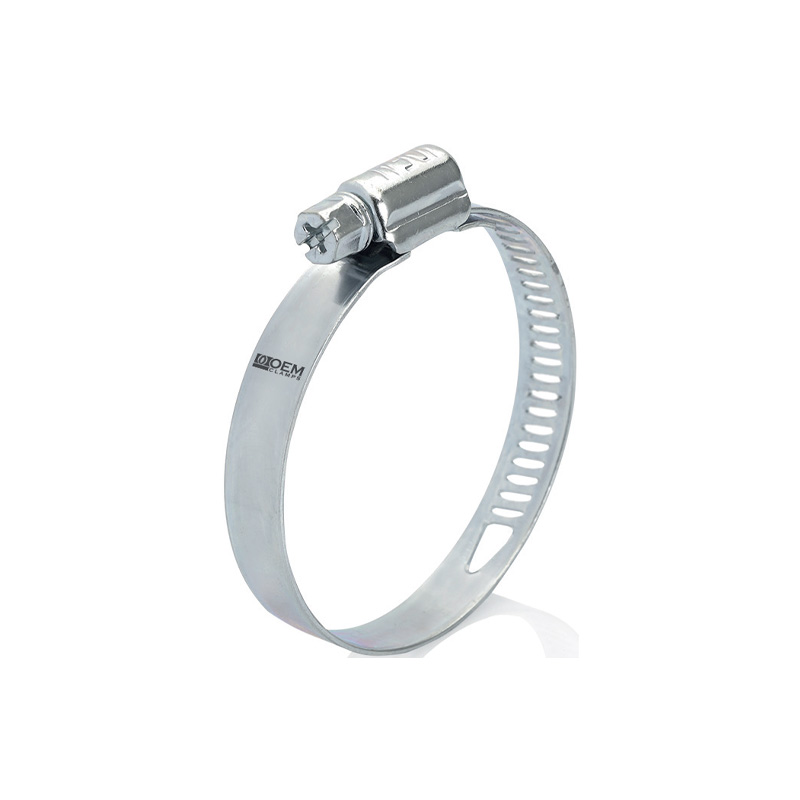
Worm Drive Hose Clamp - AK: Used for fastening hoses and pipes of various diameters, these clamps offer flexibility with their adjustable structure.
-
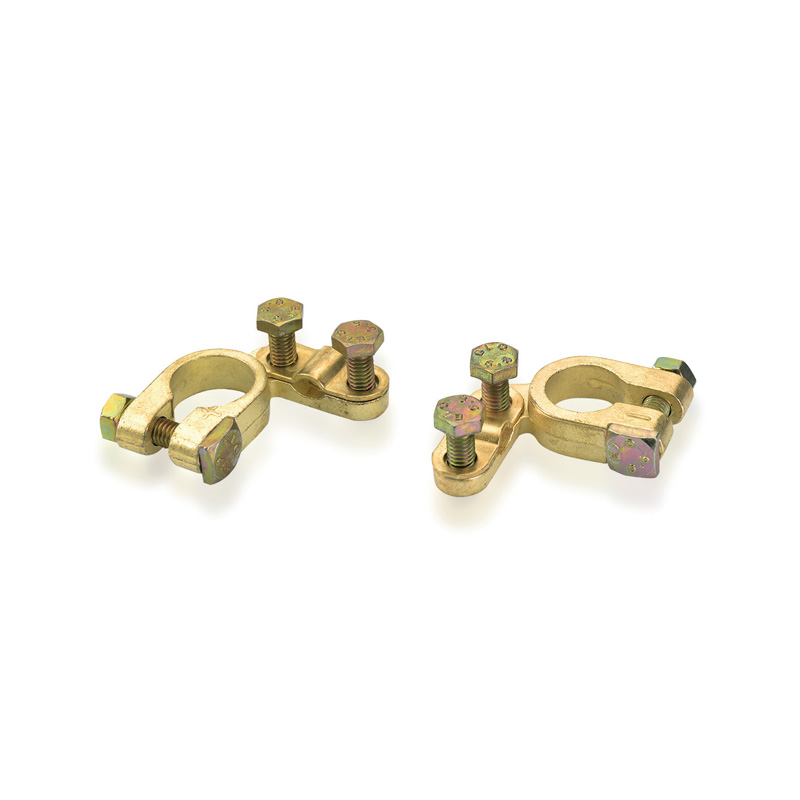
Battery Terminals - KB: Used for connecting vehicle batteries, these terminals ensure reliable electrical transmission.
-
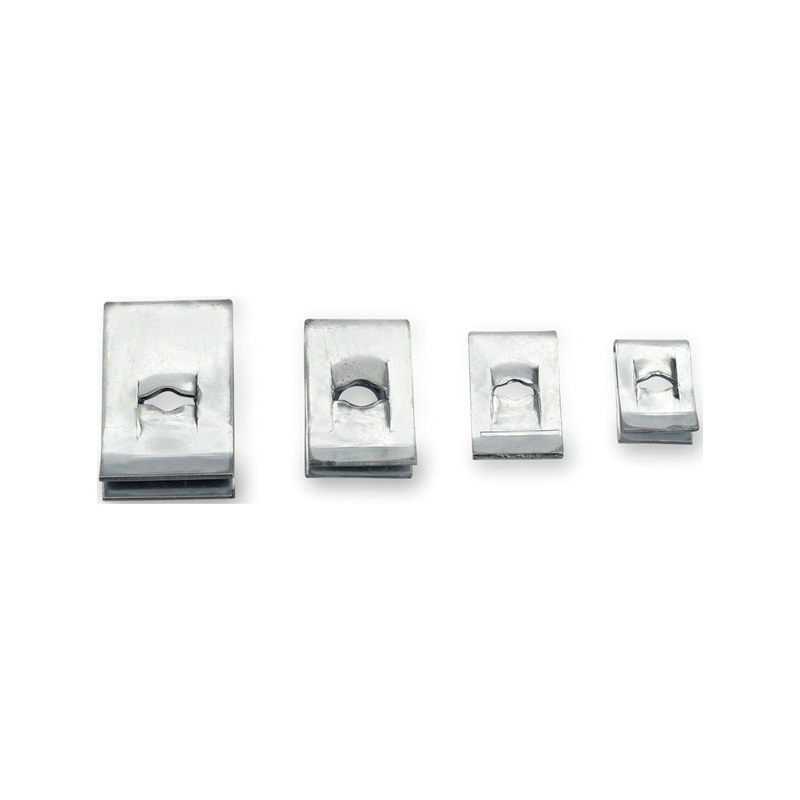
Clips - IK: Used for securing small components in various applications, clips offer practical and fast assembly capabilities.
OEM Clamps has proven its quality and reliability by exporting more than 70% of its products to world-renowned international brands. With application areas including automotive, construction, maritime, and industrial facilities, these clamps offer solutions tailored to diverse needs.
Proper clamp ion is of great importance for the safety and efficiency of systems. OEM Clamps stands out as a reliable partner in your projects by offering solutions suitable for every kind of connection need with its wide product range.
Engineering and Application Principles in Industrial Clamp Systems
In industrial facilities, the safety of fluid transfer lines is directly related to the quality of the connection components used. Serving a critical role in securing pipes, hoses, and cables, industrial clamps shoulder the sealing and integrity of massive systems despite their small size. For these systems to operate flawlessly, clamps must be ed in accordance with engineering principles—from the design stage to the assembly phase—and meticulously applied. The uninterrupted continuation of industrial processes depends on the high performance demonstrated by these small components.
Design and Manufacturing Criteria for Industrial Clamps
For a clamp to fully meet industrial standards, it must be designed to provide both mechanical durability and top-tier adaptability to environmental conditions. Every detail, from the raw material used in production to the form of the band, directly affects the clamp's operational lifespan and tightening performance in the field. Engineers develop special geometric cross-sections and alloy formulas based on the loads the clamps will be subjected to.
Materials Science and Alloy Selection
In industrial environments, harsh factors such as moisture, chemical vapors, oils, acids, and extreme temperatures are constantly present. Therefore, the material ion used in manufacturing the clamp must be made flawlessly. While more economical clamps produced from carbon steel provide sufficient protection in dry indoor environments, completely stainless steel special alloys must be chosen in aggressive environments such as food processing, chemical, pharmaceutical, and marine industries. Materials with low corrosion resistance will oxidize over time, losing their tightening force and leading to dangerous leaks in pipe lines. Determining the alloy quality appropriately for the working environment is an indispensable rule for plant safety.
Geometric Design and Tightening Mechanisms
The band width, thickness, and screw thread structure of a clamp are the most important parameters determining its capacity to apply uniform pressure. The band of a high-quality industrial clamp must have rounded, smooth edges that will not cut or damage the hose surface when tightened. Furthermore, the thread profile of the screw mechanism must be manufactured with a strength that will not strip under high torque values. Wide-band designs distribute the tightening force over a wider surface area, preventing local crushing of the hose and maximizing sealing efficiency.
Challenges and Solutions in Industrial Clamp Applications
Even if the highest quality and most durable clamp is ed for field applications, various operational disruptions may occur due to external factors or incorrect installation techniques. Anticipating these challenges in advance and taking precautions appropriate to site conditions prevents potential work accidents and costly production downtime.
Vibration and Thermal Expansion Problems
Automotive engines, heavy machinery, generators, and industrial compressors are under constant vibration during operation. This continuous shaking causes standard clamps to loosen over time and fluid lines to dislodge. In such dynamic environments, special locking nuts, spring mechanisms, or self-secure heavy-duty clamps that prevent loosening must be used. Similarly, in industrial pipe lines that expand or contract due to temperature changes, flexible connection components capable of adapting to dimensional changes of the material should be preferred to guarantee system safety.
Assembly Errors and Proper Torque Application
One of the most common errors made during the assembly phase is applying excessive or insufficient tightening without torque control. Overtightening the bolt leads to the crushing of the inner layers of the hose and permanent disruption of material integrity. Insufficient tightening, on the other hand, causes the hose to slip off the fitting under high pressure, inviting serious leaks. Therefore, during assembly, the torque values specified by the manufacturer must be strictly adhered to, appropriate torque wrenches must be used, and the clamp must be positioned at precisely the correct distance from the hose end.
 ENG
 TR
 DE